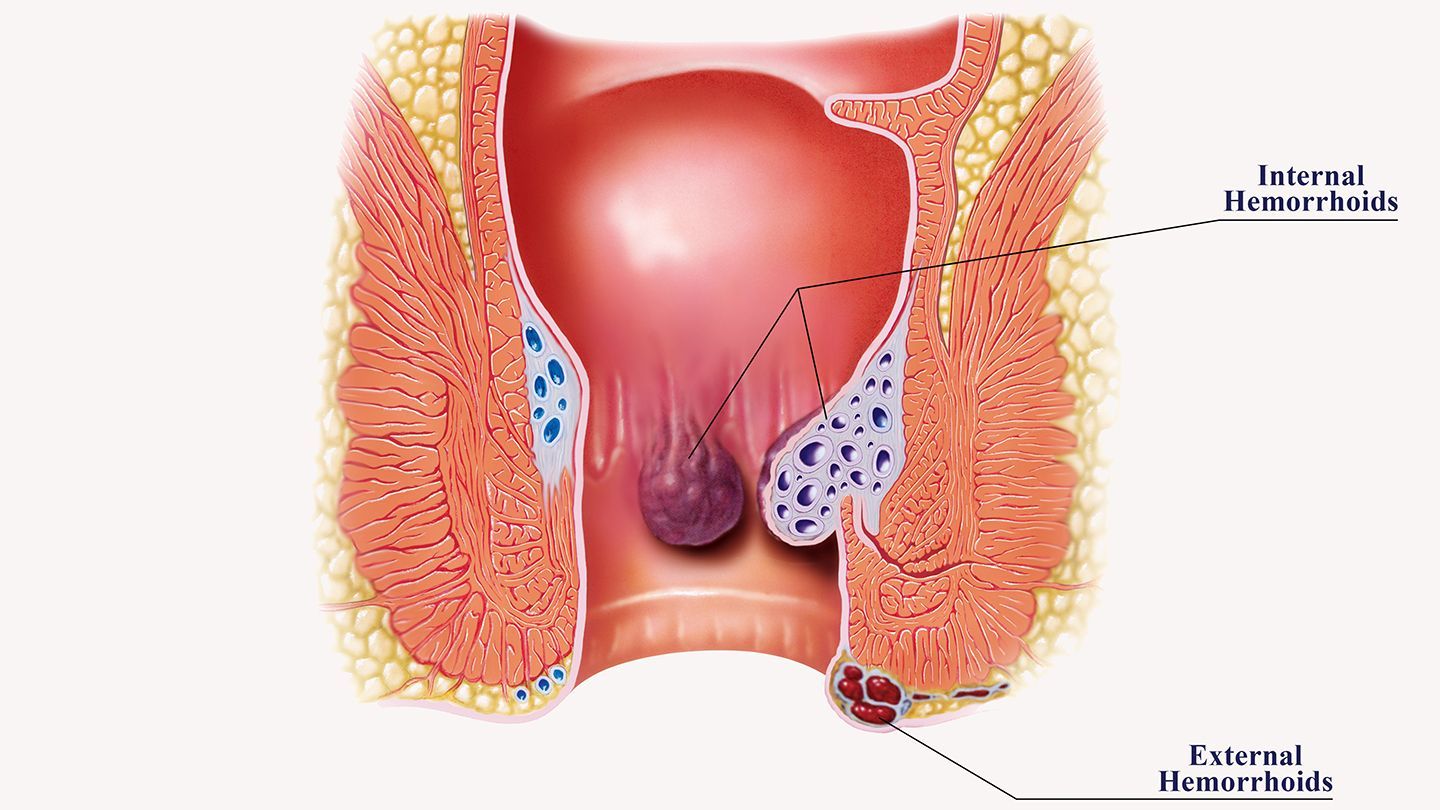
Hemorrhoids, also known as piles, are swollen veins located in the lower rectum or anus. They can be internal or external and can cause discomfort, pain, and bleeding. Hemorrhoids are a common condition that affects many people, and they can be caused by various factors such as constipation, diarrhea, straining during bowel movements, obesity, and pregnancy.
Symptoms of Hemorrhoids
Hemorrhoids are swollen veins in the anal region, and they can cause a variety of symptoms. The symptoms of hemorrhoids can vary depending on the type and severity of the condition, but some common symptoms include:
Pain or discomfort: Hemorrhoids can cause pain or discomfort in the anal region, especially during bowel movements or prolonged sitting.
Itching or irritation: Hemorrhoids can cause itching or irritation in the anal area.
Bleeding: Hemorrhoids can cause bleeding, typically during bowel movements. The blood may be bright red or darker in color.
Swelling or inflammation: Hemorrhoids can cause swelling or inflammation in the anal area.
Lumps or bumps: Hemorrhoids can cause small lumps or bumps in the anal area.
Leakage of feces: In severe cases of hemorrhoids, feces may leak from the anus.
Prolapse: Prolapse is when internal hemorrhoids extend outside of the anus.
Causes & Prevention
Hemorrhoids are swollen veins in the anal region, and their exact cause is not always clear. However, there are several factors that can contribute to the development of hemorrhoids:
Straining during bowel movements: Straining during bowel movements can put pressure on the veins in the anal area and contribute to the development of hemorrhoids.
Chronic constipation: Constipation can make bowel movements difficult and increase the risk of developing hemorrhoids.
Sitting for long periods of time: Sitting for long periods of time, particularly on the toilet, can increase pressure on the veins in the anal area.
Pregnancy: Pregnant women are more likely to develop hemorrhoids due to the increased pressure on the veins in the pelvic area.
Obesity: Being overweight or obese can put extra pressure on the veins in the anal area and increase the risk of developing hemorrhoids.
Aging: As we age, the tissues in the anal area become weaker, which can contribute to the development of hemorrhoids.
Heredity: There may be a genetic component to the development of hemorrhoids, with some people being more predisposed to them than others.
Chronic diarrhea: Chronic diarrhea can irritate the anal area and increase the risk of developing hemorrhoids.
It is important to note that not all cases of hemorrhoids can be attributed to these factors, and a healthcare provider can help determine the underlying cause and appropriate treatment plan.
10+ Best Homeopathic Remedies For Hemorrhoids And Their Guiding Symptoms
Hamamelis
Hamamelis, also known as Witch Hazel, is a common homeopathic remedy used to treat hemorrhoids. It is made from the leaves and bark of the witch hazel plant, which contains tannins and flavonoids that are believed to have anti-inflammatory and astringent properties.
In homeopathy, Hamamelis is typically recommended for hemorrhoids that are characterized by bleeding, soreness, and bruised feeling. The remedy is thought to work by strengthening the walls of the blood vessels and reducing inflammation, thereby reducing bleeding and discomfort.
Aesculus Hip.
Aesculus hippocastanum, also known as horse chestnut, is a homeopathic remedy commonly used for the treatment of hemorrhoids. Some of the signs and symptoms that may indicate the need for Aesculus hip for hemorrhoids include:
Pain and discomfort: Hemorrhoids treated with Aesculus hip may be associated with a dull, aching pain in the rectum that may radiate to the back of the thighs.
Swollen and protruding hemorrhoids: Hemorrhoids treated with Aesculus hip may be swollen and protruding, and may feel like a bunch of grapes.
Itching and burning: Hemorrhoids treated with Aesculus hip may be accompanied by itching and burning in the anus, which can be worsened by sitting or standing for long periods.
Backache: Hemorrhoids treated with Aesculus hip may be associated with a dull, heavy backache that is relieved by lying down.
Constipation: Hemorrhoids treated with Aesculus hip may be associated with constipation, which can make bowel movements difficult and painful.
Collinsonia
Collinsonia is a homeopathic remedy that is sometimes used to treat hemorrhoids. It is made from the root of the stone root plant, which contains several active compounds that are believed to have anti-inflammatory and astringent properties.
It is typically recommended for hemorrhoids that are associated with constipation and a sensation of sharp sticks in the rectum. The remedy is thought to work by reducing inflammation and improving venous circulation, which can help to reduce pain, discomfort, and bleeding.
Some of the signs and symptoms of hemorrhoids that may indicate the use of Collinsonia in homeopathy include:
- Constipation with a dry, hard stool that requires straining
- Sharp, shooting pain in the rectum
- Hemorrhoids that protrude during bowel movements and require manual replacement
- Burning or itching in the anus
- A sensation of heaviness or pressure in the rectum
Nux Vomica
Nux Vomica is made from the seeds of the strychnine tree, which contains several active compounds that are believed to have anti-inflammatory and antispasmodic properties.
It is typically recommended for hemorrhoids that are caused by a sedentary lifestyle and unhealthy eating habits. The remedy is thought to work by improving digestion and reducing inflammation, which can help to alleviate symptoms such as itching, burning, and pain.
Some of the signs and symptoms of hemorrhoids that may indicate the use of Nux Vomica in homeopathy include:
- Constipation with incomplete bowel movements
- Burning and itching in the anus
- Hemorrhoids that are painful and tender to touch
- A sensation of tightness or constriction in the rectum
- Rectal bleeding that is bright red and occurs during or after bowel movements
Sulphur
It is made from the element sulfur, which is believed to have anti-inflammatory, antiseptic, and detoxifying properties. Sulphur is typically recommended for hemorrhoids that are associated with itching and burning sensations.
The remedy is thought to work by reducing inflammation, improving circulation, and promoting detoxification, which can help to alleviate symptoms such as pain, itching, and burning.
Some of the signs and symptoms of hemorrhoids that may indicate the use of Sulphur in homeopathy include:
- Itching and burning in the anus and rectum
- Hemorrhoids that are painful and tender to touch
- Rectal bleeding that is dark or brownish in color
- Constipation with a dry, hard stool that requires straining
- A sensation of fullness or pressure in the rectum
Acidum Nitricum
Nitric Acid is made from the chemical compound nitric acid, which is believed to have anti-inflammatory and healing properties.
Acid Nit. is recommended for hemorrhoids that are associated with sharp or cutting pains, bleeding, and a sensation of sticks in the rectum.
The remedy is thought to work by reducing inflammation, improving circulation, and promoting healing, which can help to alleviate symptoms such as pain, bleeding, and discomfort.
Some of the signs and symptoms of hemorrhoids that may indicate the use of Acid Nit. in homeopathy include:
- Painful hemorrhoids, bleeding, and tender to touch
- Sharp, cutting pain in the rectum, especially during bowel movements
- A sensation of sticks or splinters in the rectum
- Rectal bleeding that is bright red and occurs during or after bowel movements
- Constipation with a dry, hard stool that requires straining
Paeonia
Paeonia is particularly useful for the treatment of hemorrhoids that are associated with a burning or tearing pain in the anus, especially during and after bowel movements. It is often prescribed for individuals who experience hemorrhoids that are accompanied by a sensation of rawness or soreness in the anus.
Some of the specific signs and symptoms that may indicate the need for Paeonia for hemorrhoids include:
Sharp, shooting pain in the anus: Hemorrhoids treated with Paeonia may be associated with a sharp, shooting pain that is worsened by touch or pressure.
Burning and itching: Hemorrhoids treated with Paeonia may be accompanied by a burning or itching sensation in the anus.
Bleeding: Hemorrhoids treated with Paeonia may be associated with bleeding during or after a bowel movement.
Soreness and tenderness: Hemorrhoids treated with Paeonia may be sore and tender to the touch, and may be associated with a feeling of fullness or heaviness in the anus.
Constipation: Hemorrhoids treated with Paeonia may be associated with constipation, which can make bowel movements difficult and painful.
Ratanhia
Ratanhia is particularly useful for the treatment of hemorrhoids that are associated with a burning, stitching, or cutting pain in the anus. It is often prescribed for individuals who experience hemorrhoids that are accompanied by a sensation of fullness or constriction in the rectum.
Some of the specific signs and symptoms that may indicate the need for Ratanhia for hemorrhoids include:
Burning pain: Hemorrhoids treated with Ratanhia may be associated with a burning pain in the rectum that is relieved temporarily by cold water.
Protruding hemorrhoids: Hemorrhoids treated with Ratanhia may be protruding and may feel like a bunch of grapes, and may be accompanied by a sensation of fullness or pressure in the rectum.
Straining during bowel movements: Hemorrhoids treated with Ratanhia may be associated with difficulty passing stools and straining during bowel movements, which can exacerbate the pain.
Soreness and itching: Hemorrhoids treated with Ratanhia may be sore and tender to the touch, and may be accompanied by itching and discomfort.
Bleeding: Hemorrhoids treated with Ratanhia may be associated with bleeding during or after a bowel movement.
Graphites
Graphites is a homeopathic remedy that is commonly used for the treatment of hemorrhoids. Here are some signs and symptoms of Graphites for the treatment of hemorrhoids in homeopathy:
- Hemorrhoids that are hard and painful to the touch.
- A sensation of fullness and heaviness in the rectum.
- A feeling as though there is a plug in the anus.
- Itching and burning in the anus.
- Hemorrhoids that are accompanied by constipation.
- Bleeding during or after bowel movements.
- Discharge from the anus that is sticky or honey-like in consistency.
- Cracks or fissures in the anus that may be painful.
People who are a good match for Graphites as a remedy may also experience dry, cracked skin, and eczema in other parts of their body. They may feel worse in cold and damp weather and may have a tendency to gain weight easily. The person may feel sad, anxious, or depressed and may have a strong desire for sweets and starchy foods.
Calcarea Fluorica
Symptoms that may indicate the need for Calc Fluor for hemorrhoids include:
Swollen and hard hemorrhoids: Hemorrhoids treated with Calc Fluor may be swollen, hard, and lumpy, and may be difficult to the touch.
Bleeding: Hemorrhoids treated with Calc Fluor may be associated with bleeding during or after a bowel movement.
Itching and burning: Hemorrhoids treated with Calc Fluor may be accompanied by itching and burning in the anus, which can be worsened by sitting or standing for long periods.
Constipation: Hemorrhoids treated with Calc Fluor may be associated with constipation, which can make bowel movements difficult and painful.
Discharge from the anus: Hemorrhoids treated with Calc Fluor may be associated with a yellowish, thick discharge from the anus.
Ignatia
Ignatia is a homeopathic remedy that is derived from the seeds of the Ignatia amara plant. It is commonly used for the treatment of emotional and mental symptoms, but it can also be used for physical ailments, including hemorrhoids.
Ignatia is particularly useful for the treatment of hemorrhoids that are caused or exacerbated by emotional stress or grief. It is often prescribed for individuals who are experiencing emotional turmoil due to a recent loss, such as the death of a loved one or the end of a relationship.
Some of the specific signs and symptoms that may indicate the need for Ignatia for hemorrhoids include:
- Hemorrhoids that are painful and feel like a lump in the anus.
- Hemorrhoids that are worsened by emotional stress or grief.
- Constipation or difficulty passing stools.
- Rectal spasms or sharp shooting pain in the anus.
- A feeling of heaviness or pressure in the rectum.
It is important to note that the remedies stated above may not be appropriate for all cases of hemorrhoids, and it is recommended to consult with a qualified homeopathic practitioner for an accurate diagnosis and appropriate treatment plan.
Diet and precautions need to follow for Hemorrhoids
Hemorrhoids are swollen veins in the anal region, and certain dietary and lifestyle changes can help prevent and manage them. Here are some diets and precautions to follow for hemorrhoids:
Eat a fiber-rich diet: A high-fiber diet can help prevent constipation, which is a common cause of hemorrhoids. Include plenty of fruits, vegetables, whole grains, and legumes in your diet.
Stay hydrated: Drinking enough water and other fluids can help soften stools, making them easier to pass.
Avoid straining: Straining during bowel movements can aggravate hemorrhoids. Take your time in the bathroom and don’t force bowel movements.
Exercise regularly: Regular exercise can help improve circulation and prevent constipation.
Practice good hygiene: Keeping the anal area clean and dry can help prevent infections and irritation.
Avoid sitting for long periods: Sitting for long periods of time can increase pressure on the veins in the anus and contribute to hemorrhoids.
Don’t delay bowel movements: Delaying bowel movements can cause stools to become harder and more difficult to pass.
Limit spicy and acidic foods: Spicy and acidic foods can irritate the digestive system and aggravate hemorrhoids.
Manage stress: Stress can contribute to constipation, so finding ways to manage stress, such as meditation or yoga, can be beneficial.
By following these dietary and lifestyle precautions, you may be able to prevent or manage hemorrhoids and reduce their symptoms. However, if you have severe or persistent hemorrhoids, it is important to consult with a healthcare provider for appropriate treatment.
Discover more from Homoeopathy For Healthcare
Subscribe to get the latest posts sent to your email.
 Homoeopathy For Healthcare